Literature-Based Summary (Non-Clinical Context)
Cellular Energy Metabolism Research
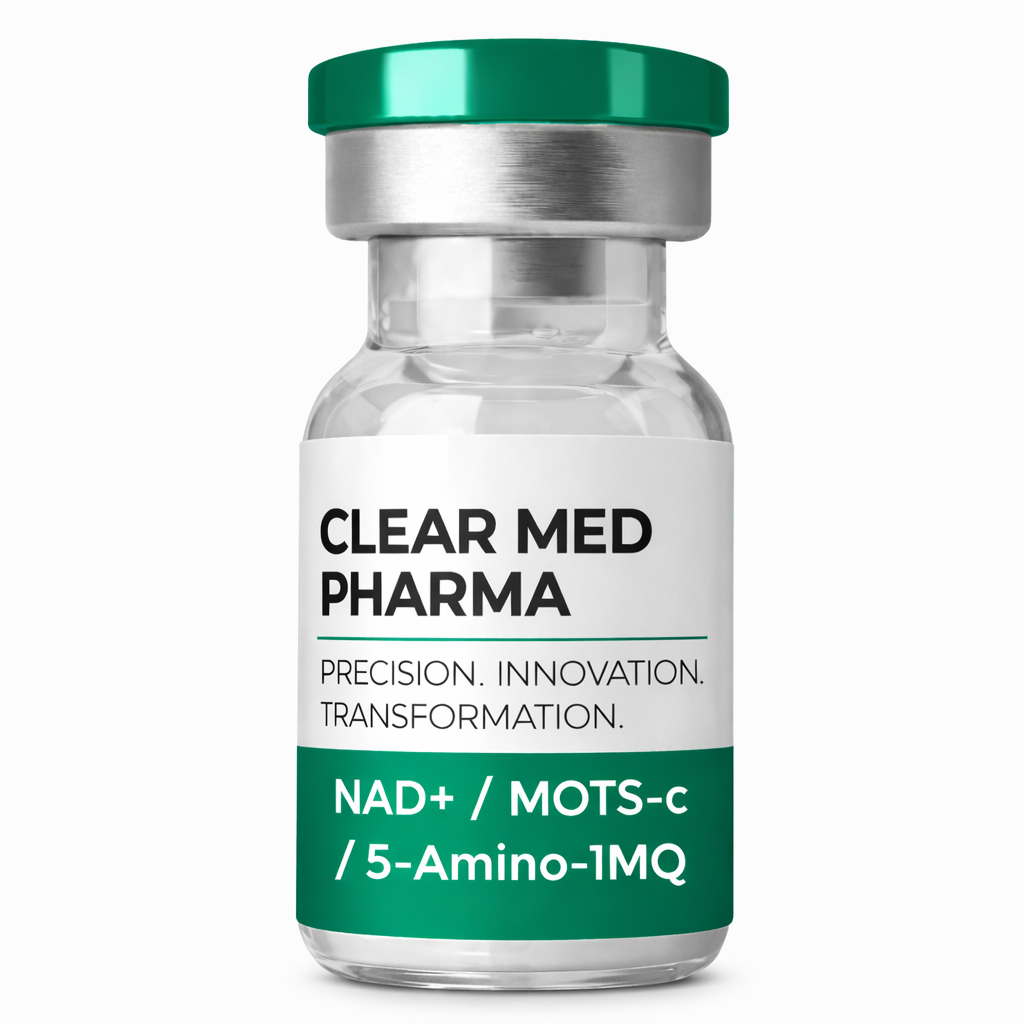
The NAD+ / MOTS-c / 5-Amino-1MQ blend combines three research compounds frequently examined in studies of cellular metabolism, mitochondrial signaling, and energy-regulation pathways. Each compound interacts with distinct metabolic signaling systems involved in cellular energy balance and metabolic adaptation.
NAD+ and Redox Signaling Studies
Nicotinamide adenine dinucleotide (NAD+) is a central coenzyme involved in cellular redox reactions and mitochondrial energy production. Laboratory research frequently investigates NAD+ for its role in electron transport chain activity, metabolic enzyme regulation, and intracellular signaling pathways associated with energy homeostasis and cellular stress responses.
Mitochondrial Signaling and MOTS-c Research
MOTS-c is a mitochondrial-derived peptide studied for its involvement in metabolic signaling and mitochondrial-to-nuclear communication pathways. Experimental models have examined MOTS-c for its role in AMPK pathway activation, glucose-metabolism signaling, and adaptive cellular responses to metabolic stress.
NNMT Pathway and 5-Amino-1MQ Studies
5-Amino-1MQ is a small-molecule compound investigated as a nicotinamide N-methyltransferase (NNMT) inhibitor. In laboratory research it is used to explore NAD+ salvage pathway regulation, cellular methylation dynamics, and metabolic efficiency mechanisms associated with NNMT enzyme activity.
Metabolic Efficiency and Cellular Adaptation Research
Experimental studies utilizing these compounds have focused on metabolic regulation, mitochondrial function, and nutrient-signaling pathways. These models allow researchers to examine mechanisms involved in energy balance, metabolic adaptation, and intracellular resource utilization.
Mitochondrial Communication and Stress Response Models
Research investigating NAD+ and mitochondrial peptides such as MOTS-c has explored cellular adaptation to metabolic stress, oxidative signaling, and mitochondrial communication with nuclear gene expression systems.
Storage Details
Lyophilized NAD+ / MOTS-c / 5-Amino-1MQ blends are stable at room temperature for short periods when protected from moisture and light. For optimal long-term stability, the product should be stored refrigerated (2-8 °C) in a sealed container. After reconstitution, solutions should be stored refrigerated and used within a limited timeframe according to laboratory protocol.
Chemical Information
Appearance: Solid white lyophilized powder in 3 mL glass ampule
Synonyms:
Nicotinamide Adenine Dinucleotide (NAD+)
MOTS-c (Mitochondrial Open Reading Frame of the 12S rRNA-c)
5-Amino-1MQ (5-Amino-1-methylquinolinium)
Storage
Store at ≤25 °C, sealed, protected from heat, light, and moisture.
Concentration
≥98%
Research Use Statement
Research Use Only (RUO). Not for human or animal use. Not for diagnostic, therapeutic, or clinical applications. No claims are made regarding metabolic enhancement, weight management, or performance effects in humans. End-user assumes responsibility for determining suitability for specific research protocols.