
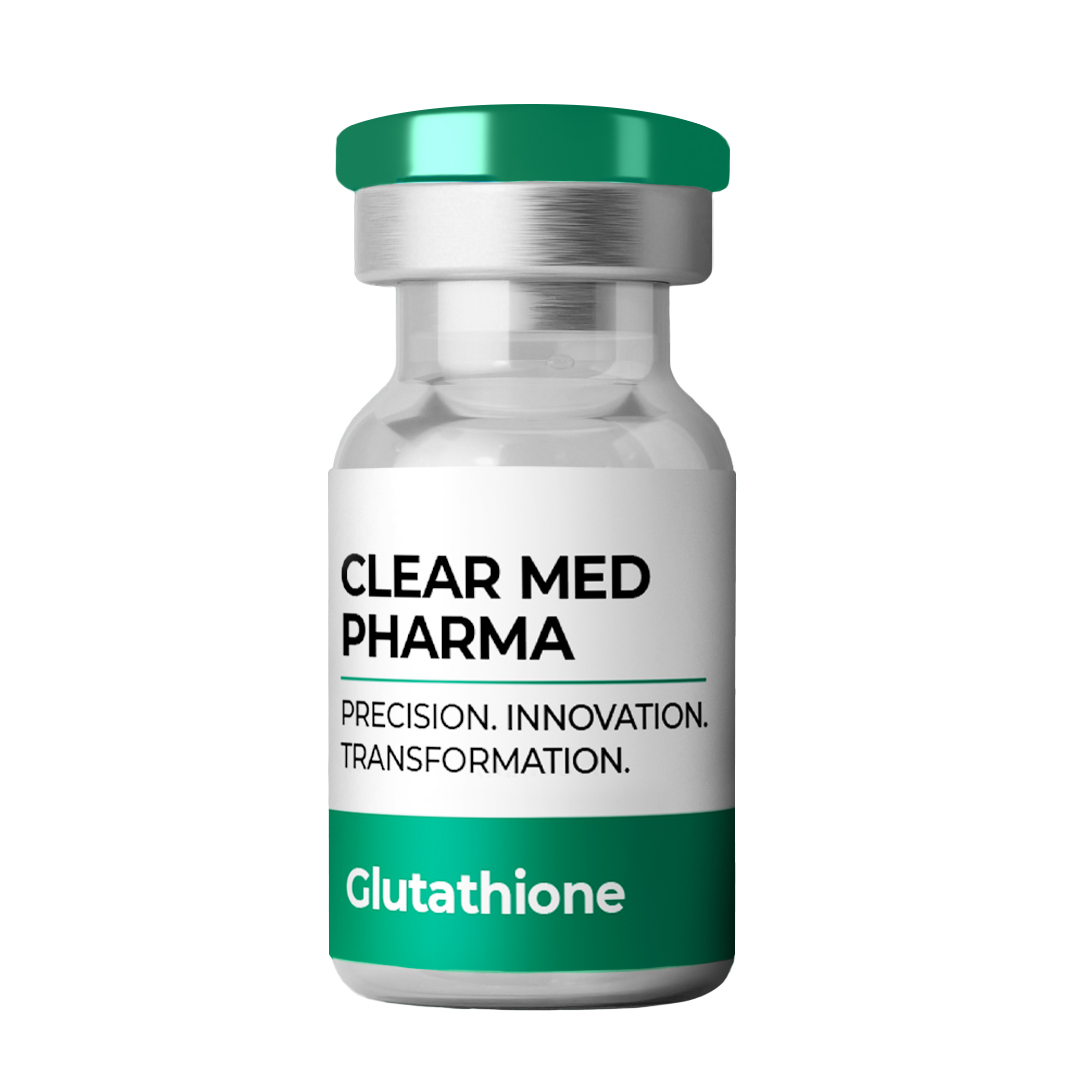

Glutathione 1500mg
Login to view prices.
Existing research has found the following:
-
Supports Antioxidant & Redox Balance Research – Studied for its potential to neutralize free radicals and mitigate oxidative stress in cellular systems.
-
Explores Detoxification & Metabolic Pathways – Investigated for its role in hepatic detoxification and conjugation of harmful compounds.
Description
Antioxidant and Redox-Regulation Research
Glutathione (GSH) is a tripeptide composed of glutamate, cysteine, and glycine. It is widely studied in cellular and pre-clinical systems for its role in intracellular redox balance, reactive oxygen species (ROS) neutralization, and oxidative stress signaling pathways.
Detoxification and Xenobiotic-Metabolism Research
In in-vitro and animal models, Glutathione participates in phase II conjugation reactions via glutathione S-transferase (GST) pathways. It is commonly utilized in studies examining hepatic metabolism, xenobiotic clearance mechanisms, and metal-binding interactions.
Immune-System Biochemistry Studies
Experimental research models indicate that Glutathione influences lymphocyte redox status and intracellular signaling cascades, supporting its use in immune-related oxidative-balance and cytokine-signaling research.
Cellular Pigmentation and Matrix-Regulation Models
In cell culture systems, Glutathione has been shown to interact with melanogenesis-related pathways and extracellular matrix components, enabling investigation of pigmentation regulation and redox-dependent cellular signaling.
Genomic Stability and Oxidative-Damage Research
Pre-clinical literature documents Glutathione’s involvement in mitigating oxidative DNA damage and maintaining intracellular redox equilibrium, making it valuable in studies of genomic integrity and cellular stress responses.
Inflammation and Cytokine-Regulation Research
Laboratory models demonstrate correlations between Glutathione depletion and altered cytokine signaling, supporting its use as a biochemical variable in inflammation-related oxidative-stress research.
Neurocellular Oxidative-Stress Models
In neuronal cell systems, Glutathione supports mitochondrial redox balance and is frequently studied in research models examining oxidative stress, excitotoxicity, and neurocellular metabolism.
Metabolic and Mitochondrial Research
Experimental models show Glutathione involvement in buffering oxidative byproducts of cellular metabolism, supporting its use in mitochondrial function and metabolic-pathway research.
Hepatic-Function and Liver-Metabolism Models
Glutathione is a principal intracellular thiol in hepatic cells and a cofactor in detoxification-related enzyme systems. It is routinely used in studies of hepatocellular metabolism and toxin-processing pathways.
Pulmonary and Epithelial Redox-Balance Research
Experimental findings indicate Glutathione contributes to epithelial redox regulation, making it relevant to research on oxidative-stress mechanisms in pulmonary and epithelial tissue models.
STORAGE DETAILS: Lyophilized Glutathione peptide is stable at room temperature for 90 days, however it should NOT stored below freezing for any extended period of time. After reconstituting Glutathione should be refrigerated at temperatures not to exceed 36 F.
WARNING: This product is a lyophilized peptide for research use only. This product is NOT for human use and can be harmful if ingested. This product is for research/laboratory use only. This product is NOT in a sterile solution and is NOT to be injected. This product should only be handled by licensed, qualified professionals. If you buy peptides online from us, they are not peptides for bodybuilding. This product is not a drug, food, or cosmetic and should not be misbranded, misused or mislabeled as a drug, food or cosmetic.
Appearance: Solid, white powder in 10mL glass ampule
Chemical Formula: C10H17N3O6S
PubChem CID: 124886
CAS Number: 70-18-8
Molecular Weight: 307.32 g/mol
Synonyms: glutathione, 70-18-8, L-Glutathione, L-Glutathione reduced, Glutathion
Storage: Store at ≤6°C, sealed, away from heat, light, and moisture.
Concentration: ≥98%
Research Use Only (RUO). Not for human or animal use. Not for diagnostic, therapeutic, or clinical applications. No claims are made regarding antioxidant, detoxification, or skin-brightening effects in humans. End-user assumes responsibility for determining suitability for specific research protocols.
You may also like
CJC-1295 No DAC (10mg)
Login to view prices.P21 (Brain-Derived Neurotrophic Factor) (10mg)
Login to view prices.Tesamorelin (10mg)
Login to view prices.Ipamorelin/CJC-1295 No DAC (5mg /5mg) - DualCore Blend
Login to view prices.