
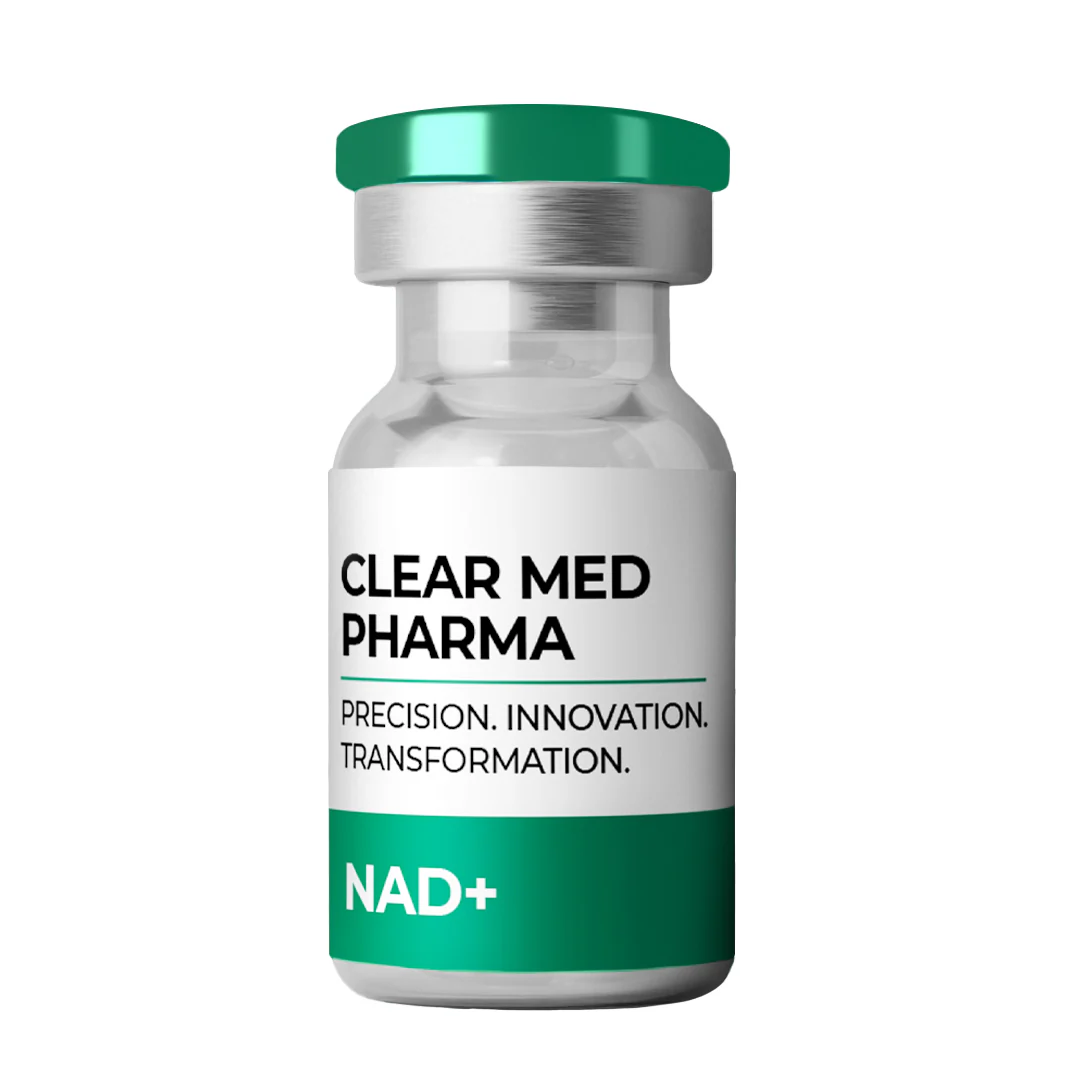

NAD+ (1000mg)
$299.00
Existing research has found the following:
-
Supports Cellular Energy Research – Studied for its central role in mitochondrial ATP production and overall energy metabolism.
-
Explores Neurocognitive & Cellular Protection Pathways – Investigated for promoting neuronal health, cognitive performance, and oxidative stress defense.
-
Evaluates DNA Repair & Longevity Mechanisms – Examined for its involvement in sirtuin activation and maintenance of genomic stability.
Description
Mitochondrial Function and Cellular-Energy Research
-
Nicotinamide Adenine Dinucleotide (NAD⁺) is a coenzyme central to oxidative phosphorylation and redox metabolism. It is studied in cellular and pre-clinical models for its ability to drive mitochondrial ATP production and regulate energy-transfer processes within cells.
Neuroprotection and Cognitive-Function Studies
-
In in-vitro systems, NAD⁺ has been shown to modulate neuronal survival, synaptic integrity, and neurotransmitter balance, supporting its use in neurodegeneration and cognitive-performance research.
DNA-Repair and Genomic-Stability Models
-
Experimental findings demonstrate that NAD⁺ serves as a substrate for PARP and SIRT-family enzymes involved in DNA repair, genomic protection, and chromatin remodeling, allowing its use in studies of oxidative damage and cellular senescence.
Longevity and Sirtuin-Activation Research
-
Pre-clinical data indicate NAD⁺ regulates sirtuin-dependent pathways that influence cellular metabolism, autophagy, and lifespan, making it a key molecule for studying anti-aging and longevity-related mechanisms.
Metabolic and Energy-Utilization Studies
-
In animal research, NAD⁺ levels correlate with improved lipid oxidation and glucose utilization, supporting its use in metabolic-efficiency, mitochondrial-function, and nutrient-partitioning models.
Inflammation and Oxidative-Stress Studies
-
NAD⁺ is involved in redox signaling and the regulation of pro-inflammatory cytokines. Experimental models have used it to examine mechanisms of oxidative-stress resistance and inflammatory homeostasis.
Muscle-Recovery and Exercise-Performance Research
-
Laboratory studies indicate NAD⁺ influences mitochondrial biogenesis and muscle endurance, enabling its use in recovery, energy output, and fatigue-resistance research.
Detoxification and Cellular-Repair Mechanisms
-
In pre-clinical systems, NAD⁺ plays a role in hepatic detoxification and the neutralization of reactive oxygen species (ROS), providing a foundation for cellular-restoration and metabolic-cleansing studies.
Cardiovascular and Endothelial Function Studies
-
NAD⁺ and its redox cycle are integral to nitric-oxide synthesis and endothelial-cell signaling, making it suitable for examining vascular reactivity, microcirculation, and cardiac-metabolism pathways.
Neurotransmitter and Mood-Regulation Research
-
Experimental evidence links NAD⁺-dependent enzymes to neurotransmitter synthesis and neuronal energy metabolism, supporting its use in stress-response and neurochemical-balance research.
STORAGE DETAILS
Lyophilized Nicotinamide Adenine Dinucleotide (NAD+) is stable at room temperature for 90 days; however, it should NOT be stored below freezing for any extended period. After reconstitution, refrigerate at ≤36°F.
Product Specifications
-
Application: Research peptide coenzyme involved in various metabolic processes
-
Appearance: Solid, white powder in 5ml glass ampule
-
Chemical Formula: C21H27N7O14P2
-
PubChem CID: 5893
-
CAS Number: 53-84-9
-
Molecular Weight: ~663.43 g/mol
-
Synonyms: Nicotinamide adenine dinucleotide, Coenzyme I, β-NAD, NADH
-
Storage: Store at -10°C, sealed, away from heat, light, and moisture.
-
Concentration: ≥99%
Research Use Only (RUO). Not for human or animal use. Not for diagnostic, therapeutic, or clinical applications. No claims are made regarding energy enhancement, anti-aging, or neuro-protection in humans. End-user assumes responsibility for determining suitability for specific research protocols.